Should You Repair or Replace Your Asphalt Driveway? 6 Signs to Help You Decide

Cracks, potholes, low spots, and worn areas don't always mean your entire driveway needs to be replaced. At the same time, continuing to patch asphalt that has larger problems underneath can turn into a cycle of temporary fixes.
At The Road Doctor, we look at more than what you can see on the surface. The condition of the asphalt, the base underneath it, drainage, the extent of the damage, and how the driveway is holding up as a whole all play a role in determining the right solution.
We've seen plenty of driveways where a targeted repair can add useful life to the pavement. We've also seen situations where continuing to patch the surface doesn't address what's actually causing the problem.
So, how do you know when asphalt driveway repair makes sense and when it's time to consider replacement? Here are six signs that can help point you in the right direction.
1. Look at How Widespread the Cracking Is
A few cracks don't automatically mean you need a new driveway. Cracking is a normal part of asphalt aging, especially here in Central Illinois. Our pavement goes through hot summers, freezing winters, rain, snow, and repeated freeze-thaw cycles. Over time, those conditions can take a toll.
The important question is how much of the driveway is affected.
A handful of isolated cracks may be manageable with the right maintenance or repair. When cracking becomes widespread, connects across large sections of pavement, or continues returning after previous repairs, there may be a larger issue.
Think of the cracks as clues. We want to understand why they're happening before deciding how to fix them.
2. Pay Attention to Potholes That Keep Coming Back
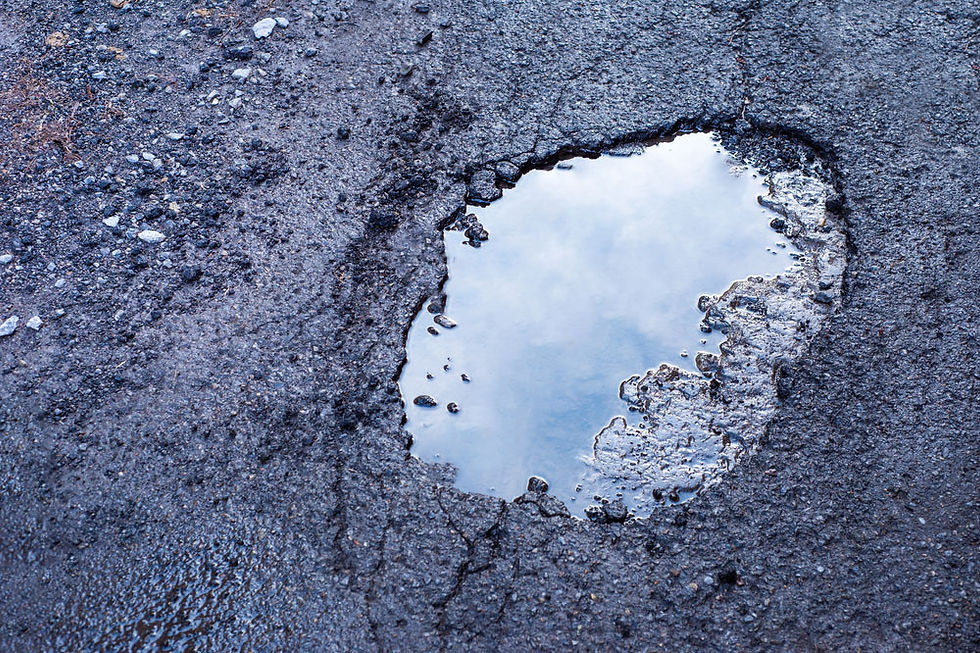
One pothole doesn't necessarily call for an entirely new driveway. Pothole repair can be an effective way to address localized damage, especially when the surrounding asphalt and base are still in good condition. Repeated potholes are a different story.
Potholes often develop when water gets into cracks and weakens the pavement or material underneath. Traffic continues putting pressure on that weakened area until the asphalt starts breaking apart.
If you're repairing the same area again and again, simply filling the hole may no longer be the best long-term approach. We need to determine why that section keeps failing.
3. Watch for Sinking, Rutting, and Low Spots
Not every asphalt problem starts at the surface. If part of your driveway is sinking, developing deep ruts, or holding water in areas where it didn't before, the problem may involve the base underneath the asphalt. That's important because asphalt is only as good as what it's sitting on.
A strong, properly prepared base helps support the pavement and distribute the weight of vehicles. When that support becomes unstable, repairing only the top layer may not solve the problem.
This is one of the biggest reasons we don't recommend making a repair-or-replace decision based on appearance alone. Sometimes the asphalt is showing you symptoms of something happening underneath.
4. Look at How Water Moves Across Your Driveway
Water is one of asphalt's biggest enemies. A properly functioning driveway should direct water away rather than allowing it to sit in low areas or continually work its way into cracks.
If you regularly see standing water, drainage channels forming, washed-out edges, or damage returning in the same wet areas, we want to understand where that water is going.
Repairing the surface without addressing an ongoing drainage or base issue can mean dealing with the same problem again later.
Sometimes a localized repair is enough. Other situations require a more substantial solution. Either way, managing water is an important part of protecting the pavement.
5. Consider the Overall Condition, Not Just the Worst Spot
It's easy to focus on the biggest pothole or widest crack in your driveway, but that one area doesn't always tell the whole story. Take a look at the driveway as a whole.
Is most of the pavement still solid with one or two damaged sections? Or are cracks, low areas, rough surfaces, and patches spread throughout?
If the majority of the driveway is still in good condition, repairing specific problem areas may make more sense than replacing everything.
When deterioration is widespread, however, you have to start asking whether continuing to make individual repairs is actually providing good value.
We don't believe in replacing pavement just because it isn't perfect. The goal is to choose the option that makes sense for the condition of the driveway and provides the best long-term value.
6. Pay Attention When Repairs Stop Lasting
Previous repairs can tell us a lot about what's happening with a driveway.
If an area has been patched multiple times and continues to fail, there's usually a reason.
The issue may be deeper than the asphalt itself. There could be weak base material, drainage problems, movement underneath the pavement, or deterioration surrounding the repaired area.
At some point, continuing to repair the same problem becomes less practical than addressing the larger cause.
That's why we don't just ask, "Can this be patched?"
We also consider whether repairing it is the right investment.
When Does Asphalt Driveway Repair Make Sense?
Repair is often a good option when damage is localized and the rest of the driveway still has plenty of life left.
Depending on the condition of the pavement, repair may make sense when:
Cracking is limited to smaller areas
There are only a few isolated potholes
Most of the driveway remains structurally sound
Damage is concentrated in one section
Previous repairs are still performing well
There isn't widespread sinking or base failure
The goal of a repair should be to address a specific problem and help preserve the pavement around it.
That's different from repeatedly covering up symptoms when the driveway is failing on a larger scale.
When Is Asphalt Driveway Replacement the Better Option?
Replacement becomes worth considering when deterioration is widespread or when the underlying support is no longer doing its job.
That may include a driveway with:
Extensive cracking throughout the surface
Multiple potholes or failing patches
Significant sinking or rutting
Large areas of standing water
Widespread deterioration
Problems that repeatedly return after repairs
Replacement also gives us the opportunity to address issues below the existing pavement when necessary.
That's an important distinction. If the underlying conditions contributed to the original driveway failing, putting new asphalt over the same problem isn't the solution we want.
How Old Is Too Old for an Asphalt Driveway?
Age matters, but we don't think homeowners should make the decision based on a number alone. Two driveways installed at the same time can age very differently.
Traffic, drainage, base preparation, installation quality, maintenance, weather exposure, and the types of vehicles using the driveway can all affect how long asphalt lasts.
Instead of saying, "Your driveway is a certain age, so it's time to replace it," we prefer to look at how the pavement is actually performing.
An older driveway that's still structurally sound may have useful life left. A newer driveway with serious base or drainage problems may need more attention much sooner. Condition tells us more than age alone.
Why Fall Is a Good Time to Take a Look at Your Driveway
You don't have to wait until your driveway is falling apart to start paying attention to it. Heading into fall is a good time for Central Illinois homeowners to take a closer look at their pavement. Cracks and damaged areas that allow water to penetrate the surface can face additional stress as temperatures drop and freeze-thaw cycles begin.
That doesn't mean every crack requires a major repair before winter. It does mean that identifying problems now can help you understand what you're dealing with and decide what needs attention, what can be maintained, and what can wait.
That knowledge makes it easier to plan instead of reacting when a small problem becomes much more noticeable.
Don't Replace a Driveway That Can Be Repaired
One of the most important things we tell property owners is that the most expensive option isn't automatically the best option. If a driveway can be properly repaired and still has useful life remaining, replacement may not be necessary.
The opposite is also true. If the driveway has widespread deterioration or problems underneath the surface, repeatedly spending money on patches may not be the best use of your budget.
At The Road Doctor, we want to understand why your pavement is failing before recommending how to fix it. Sometimes that means repairing a problem area. Sometimes it means replacing a larger section or the entire driveway. And sometimes the pavement simply needs continued maintenance and monitoring.
The right answer depends on what's actually happening with your driveway.
Asphalt Driveway Repair and Replacement in Central Illinois
If you're looking at cracks, potholes, sinking areas, or an aging asphalt driveway and aren't sure whether you should repair or replace it, you don't have to make that decision on your own.
The Road Doctor works with homeowners throughout Central Illinois to evaluate asphalt driveways and recommend solutions based on the condition of the pavement, not just what the surface looks like.
Contact The Road Doctor to have your driveway evaluated and find out whether asphalt repair or replacement makes the most sense for your property.